Custom toys can look harmless, yet a loose button, sharp seam, or hidden chemical risk can cause serious harm. In 2026, responsible testing must examine the complete product, not only its appearance. Designers should review the toy’s materials, moving parts, paint, packaging, and intended age group. Small details matter. A three-millimeter gap may trap a finger. A weak magnet may detach after repeated handling.
So, what are the safety testing requirements for custom toys? The answer depends on the destination market, toy category, and child’s age. Common evaluations include mechanical and physical testing, flammability checks, chemical screening, electrical safety, sound-level review, and small-parts testing. Standards such as ASTM F963, the U.S. CPSIA, EN 71, and ISO 8124 may apply, but requirements should be confirmed with a qualified compliance laboratory. Rules can change.
Nancy Cowles, executive director of Kids In Danger, has said, “Parents should not have to be product safety experts.” That principle should guide every custom-toy project. A reliable process combines documented material records, age grading, prototype stress tests, accredited laboratory testing, and production inspections. Keep test reports traceable. Recheck changes.
Testing is not a one-time label.
A toy may pass in the laboratory and still fail after months of rough play. Children chew, twist, throw, and share toys in unpredictable ways. I have seen teams focus heavily on color and packaging while overlooking a fragile hinge. That mistake is easy to repeat. This guide explores practical testing steps for safer custom toys in 2026, while recognizing an uncomfortable truth: no checklist can predict every real-world use.
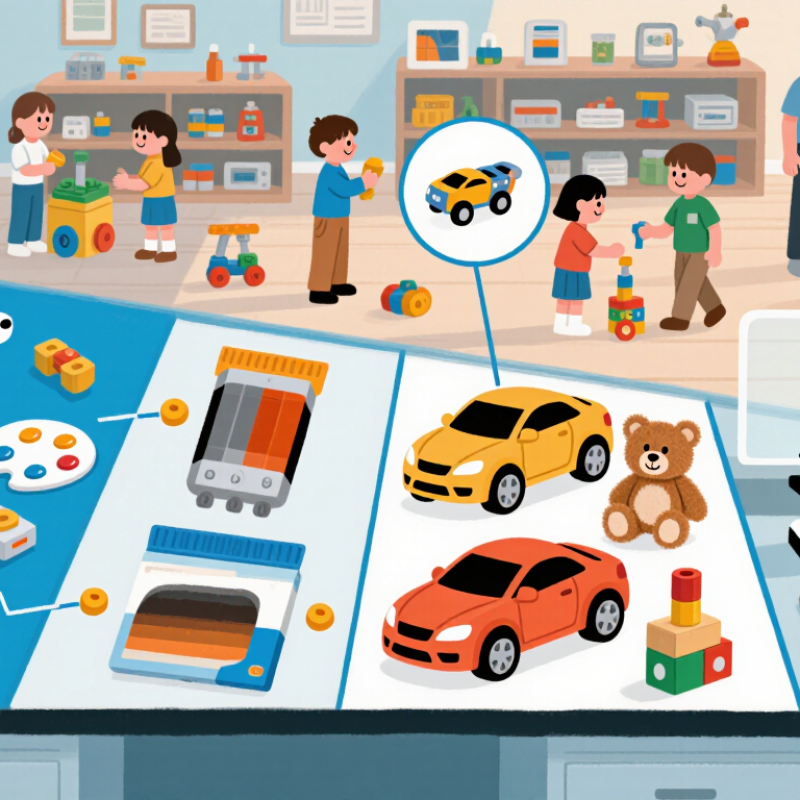
Define the intended use before choosing tests. A toy for stacking differs from one designed for pulling, wearing, or water play. Write down the child’s actions, expected force, play location, and adult supervision. Small parts, cords, magnets, and detachable wheels need special attention. The U.S. CPSC’s 2023 Toy-Related Deaths and Injuries report recorded more than 200,000 emergency-department injuries involving children under 15. That figure makes vague product descriptions risky.
Set an age range from real behavior, not appearance. A bright toy may still suit children over three because of small components. Check foreseeable misuse, including biting, twisting, dropping, and repeated washing. Then document every material: plastic grade, paint, fabric, adhesive, filling, and surface coating. Ask suppliers for composition and migration data. Test finished samples, not only raw materials. ASTM F963-23 provides a useful technical framework, while local requirements may add chemical, mechanical, flammability, or labeling checks.
Material changes can quietly change the risk. A softer plastic may tear faster. A heavier filling may create impact hazards. Prototype testing should include repeated-use cycles and temperature exposure. Safety Gate’s 2023 report listed 3,412 product alerts across Europe, with toys among commonly notified categories. Our first test plan is often incomplete. Recheck assumptions. A reviewer should be able to trace each risk to a test result, sample number, and intended age.
Before testing a custom toy, define its destination market, intended age range, and play pattern. These details determine which rules apply. In the United States, ASTM F963-23 is incorporated into the mandatory toy safety standard. Its requirements cover mechanical and physical hazards, flammability, and chemical safety. In the European Union, manufacturers commonly use EN 71-1 for mechanical and physical properties, EN 71-2 for flammability, and EN 71-3 for migration of certain elements. Check current national requirements before selecting a test plan; a standard accepted in one market may not satisfy another.
Test the finished toy, not just its raw materials. A painted wooden figure may need coating and substrate checks, while a plush toy needs seam, filling, and flammability assessment. Include small-parts tests when the age grade makes them relevant. For toys with electronics, assess applicable battery and electrical risks. The U.S. Consumer Product Safety Commission’s 2023 report estimated 231,700 toy-related emergency-department injuries among children aged 14 and younger. That figure is a useful reminder: small design details matter. A sharp edge can appear only after repeated pulling. Lab results help, but they cannot perfectly reproduce every child’s play. Keep test reports, material records, and design revisions together, and reassess after any change.
Custom toys need more than a visual inspection. Mechanical testing should cover drops, pull forces, torque, sharp edges, and small-part release. Test wheels, hinges, magnets, and stitched joints after repeated use. The U.S. Consumer Product Safety Commission reported 231,800 toy-related emergency-room injuries in 2023. Choking and falls remain practical concerns. Test like a child would.
Chemical screening should examine paints, plastics, coatings, and fabric dyes. Check for restricted phthalates, heavy metals, and other hazardous substances through accredited laboratories. The European Commission’s Safety Gate 2023 report listed chemical risk among the most frequently notified product hazards. Electrical toys require insulation, short-circuit, abnormal-operation, battery-access, and overheating tests. Fire assessment should examine ignition, flame spread, and heat near charging parts. IEC 62115 provides a useful reference for electrical toys, while ISO/IEC 17025 supports reliable laboratory competence. Test every design change. Small changes can create new hazards.
Tips: Keep production samples from each batch. Photograph failures and record temperature, force, time, and component age. Use children’s likely misuse as a test scenario, without placing real children at risk. Ask an independent laboratory to review the test plan. My testing experience suggests prototypes often pass gentle checks but fail after repeated impacts. That weakness deserves another test, not a rushed approval.
| Hazard Area | What to Assess | Practical Test or Check | Acceptance Basis / Key Limit | Relevant U.S. References |
|---|---|---|---|---|
| Small parts and age grading | Detached or detachable components that could present a choking, aspiration, or ingestion hazard. | Inspect the toy and apply the applicable use-and-abuse tests, such as tension, torque, impact, and compression. Assess resulting parts with the prescribed small-parts test fixture. | For toys intended for children under 3, prohibited small parts must not be present before or after applicable use-and-abuse testing. Apply the age-grading rules and test procedures for the destination market. | 16 CFR Part 1501; ASTM F963, including applicable age-grading and use-and-abuse provisions. |
| Sharp points and edges | Accessible metal or glass edges and points, including hazards exposed after breakage, wear, or abuse testing. | Examine accessible areas before and after applicable impact, drop, torque, tension, and other use-and-abuse tests; evaluate with the relevant sharp-edge and sharp-point test methods. | Accessible hazardous sharp edges or points must not create a risk prohibited by the applicable toy-safety requirements. A visual inspection alone is not a substitute for prescribed tests. | 16 CFR Part 1500; ASTM F963 mechanical and physical requirements. |
| Mechanical strength and stability | Structural failure, pinch or entrapment hazards, unstable components, and parts that may break into hazardous fragments. | Identify foreseeable use and misuse; conduct the applicable drop, impact, torque, tension, compression, and stability tests for the toy type and intended age. | The toy should not expose children to prohibited hazards after required tests. Exact procedures and applicability depend on the product design, age group, and current standard. | ASTM F963 mechanical and physical requirements; relevant provisions of 16 CFR Parts 1500 and 1501. |
| Lead in accessible components | Lead in accessible substrate materials and in paint or similar surface coatings. | Screen materials and use an appropriate laboratory method to determine lead content in each applicable material or component. Keep supplier declarations and test reports. | U.S. federal limits include 100 ppm total lead in accessible substrate materials and 90 ppm lead in paint and similar surface coatings, subject to applicable statutory requirements and exemptions. | CPSIA Sections 101 and 102; 16 CFR Part 1303 for lead-containing paint. |
| Restricted phthalates | Applicable plasticized components, coatings, and other accessible materials that may contain regulated phthalates. | Review the bill of materials and supplier information; test applicable materials using a method suitable for the regulated phthalates. | For covered children’s toys and child-care articles, U.S. limits generally restrict each of eight specified phthalates to 0.1% (1,000 ppm) in accessible component parts. Confirm scope, exemptions, and the current list of covered substances. | CPSIA Section 108; 16 CFR Part 1307. |
| Other chemical content | Materials, accessible liquids, surface coatings, and migration-related hazards relevant to the toy’s materials and intended use. | Assess the complete material list and intended exposure routes; select chemical tests based on the applicable legal requirements and the toy’s construction. | There is no single universal chemical pass limit for every toy material. Determine applicable substance limits and test scope for the destination market and product category. | ASTM F963 chemical requirements; applicable CPSIA rules and other destination-market requirements. |
| Electrical and battery hazards | Electric shock, overheating, short circuits, accessible live parts, battery leakage, and access to button or coin batteries. | For powered toys, assess electrical construction and foreseeable faults; inspect battery compartments, retention features, wiring, and accessible components. Test button-cell compartments under the applicable procedures. | Meet the electrical and battery-access requirements that apply to the toy. In the U.S., products with button or coin batteries may be subject to secure-compartment requirements; determine whether the product falls within the rule’s scope. | ASTM F963 electrical and battery provisions; Reese’s Law and 16 CFR Part 1263, where applicable. |
| Flammability | Rapid flame spread in applicable materials, including textiles, pile fabrics, and other combustible toy components. | Identify material and product-specific requirements, then test representative samples using the method required for the toy and destination market. | Apply the relevant legal test and limit for each material or toy type. Flammability criteria are not identical across all toy materials or jurisdictions. | 16 CFR Part 1500, including applicable flammability provisions; ASTM F963 flammability requirements. |
| Sound and sensory features | Potentially harmful sound levels and hazards from lights, vibration, or other sensory features. | Measure sound output using the method and operating conditions specified by the applicable toy standard; evaluate accessible components and foreseeable use. | Use the applicable age- and product-specific requirements rather than applying a general sound limit to every toy. | ASTM F963 requirements for sound-producing toys and other applicable product-specific provisions. |
| Production consistency and documentation | Whether production units match the tested design, materials, suppliers, and construction. | Test production-representative samples; maintain a component and material list, risk assessment, test reports, supplier records, and change-control process. | For covered U.S. children’s products, required testing and certification obligations apply. Reassess safety when materials, suppliers, manufacturing processes, or design change. | CPSIA; 16 CFR Part 1107; applicable ASTM F963 requirements. |
Important: Requirements depend on the toy’s design, intended age group, and sales market. Confirm the current applicable regulations and standard editions for each market in 2026, and use a qualified laboratory for required testing and certification. This table is a planning aid, not a substitute for a product-specific compliance assessment.
How to Test Custom Toys for Safety in 2026?
Conduct Laboratory Tests and Evaluate the Results
A useful lab report starts with traceable samples: record each toy’s materials, age grade, production batch, and tested configuration. Ask an accredited laboratory to assess relevant hazards, including small parts, sharp edges, seam strength, impact resistance, flammability, and restricted chemical migration. Use current test methods for your intended markets, such as applicable ASTM F963 or EN 71 requirements. CPSC’s 2023 toy-related report estimated 231,700 emergency-department-treated injuries among U.S. children aged 12 and younger. That figure makes physical testing more than a paperwork exercise.
Read beyond the pass/fail box. Confirm that the report identifies the exact sample and test method, lists measured results, and explains any deviations or failed criteria. Check that conditioning matched real use, such as repeated drops or pulling a stitched ear. A passing result applies to the tested sample and conditions; it does not automatically cover a changed coating, supplier, or design. This is easy to overlook. Review uncertainty and borderline results with the lab, then retest revised samples before production. Keep the reports and link them to batch records.
Tips: Send production-equivalent samples, not hand-finished prototypes. Ask the lab what each test does not cover, too. A pass is useful, not perfect. Reflect on whether your test plan reflects how children may actually handle the toy.
Laboratories measure the migration of restricted elements from toy materials and compare each result with the applicable EN 71-3 limit. The limits below are expressed in mg/kg and use a logarithmic scale because the permitted values vary substantially. A laboratory result at or below the relevant limit supports compliance; any result above it requires investigation and corrective action.
Reference framework: EN 71-3, Migration of Certain Elements, Category III dry, brittle, powder-like or pliable materials. Always confirm the current edition and destination-market requirements before testing.
When testing a custom toy in 2026, treat compliance records as part of the product, not paperwork stored later. Keep a controlled file for each design version, material, supplier declaration, risk assessment, and test report. Record the sample code, production date, batch size, and photographs before testing. This detail matters. It connects a failed result to real stock. Use an independent, competent laboratory where possible. Verify that its scope matches the required tests for the toy’s age group and market. Do not rely on a supplier statement alone. Review applicable safety standards, labeling rules, and chemical limits before approving the sample.
A practical file should show mechanical and physical test results, flammability findings, chemical reports, and checks for small parts, sharp edges, seams, and magnets. Instructions and warnings must match the tested design. Keep signed approvals, corrective actions, and the reason for every change. If paint, fabric, filling, fasteners, or packaging changes, assess whether retesting is needed. A cheaper component can alter risk. I have seen teams overlook packaging because it seemed separate from the toy. That assumption needs challenging.
Plan reviews at launch, after the first production run, and at fixed intervals, such as every six or twelve months. Adjust the schedule according to risk and sales volume. Review complaints, returns, injury reports, supplier changes, and failed inspections. Track them by batch, not just by product name. Keep retained samples in labeled, protected storage. Test again after tooling changes or repeated quality drift. Reviewers should sign decisions, record unresolved questions, and set due dates. Some notes will be incomplete. Mark uncertainty clearly, then correct it instead of quietly filling gaps.
Describe its intended use, likely child actions, expected force, play location, and supervision. A stacking toy needs different checks from a pull toy.
Base it on children’s real behavior, not the toy’s appearance. Consider biting, twisting, dropping, and small parts that may pose risks to younger children.
Record plastic, paint, fabric, adhesive, filling, and surface coatings. Test finished samples too; raw-material data alone may miss changes in the final toy.
Note each hazard, test method, sample number, and intended age. Include small parts, cords, magnets, detachable wheels, sharp edges, seams, and repeated use.
Softer plastic may tear sooner, while heavier filling may increase impact risks. Even a small supplier change deserves a fresh risk review.
Keep risk assessments, supplier declarations, test reports, photographs, sample codes, production dates, and batch sizes in a controlled file.
Use a competent independent laboratory where possible. Check that its testing scope matches the toy’s age group and intended market.
Review at launch, after the first production run, and at set intervals, such as every six or twelve months. Adjust for risk and sales volume.
Track complaints, returns, and failed inspections by batch. Reassess testing after changes to paint, fabric, fasteners, packaging, or tooling.
Mark uncertainty clearly and assign a follow-up date. Do not quietly fill gaps; that can hide assumptions worth challenging.
Testing custom toys for safety in 2026 requires a structured process that begins by defining the toy’s intended use, target age range, functions, and materials. These details help determine potential risks and clarify what are the safety testing requirements for custom toys? Manufacturers should identify the applicable safety standards and testing expectations for the intended market, then assess mechanical hazards such as sharp edges, small parts, and breakage, along with chemical, electrical, and fire-related risks. Special attention should be given to how children may misuse or repeatedly handle the toy.
Qualified laboratories can perform appropriate physical, chemical, electrical, and flammability tests using representative samples from production. Test results should be carefully reviewed against established requirements, with any failures corrected and verified through retesting. Finally, manufacturers should maintain complete records covering materials, design specifications, risk assessments, laboratory reports, and corrective actions. Regular safety reviews are also important because materials, suppliers, designs, and production processes may change over time.

Kasten Toys