Choosing safe custom toys for toddlers is crucial for their development and well-being. According to Dr. Sarah Thompson, a child safety expert, “Parents must prioritize safety when selecting toys for their little ones.” Her insight emphasizes the importance of informed choices.
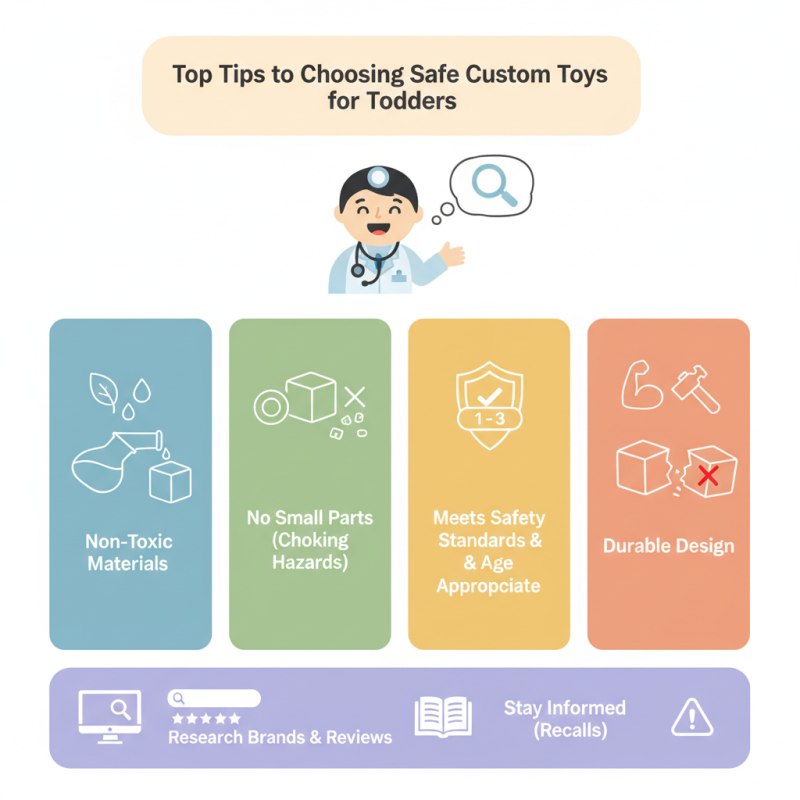
How to choose a safe custom toy for a toddler? This question requires thoughtful consideration. Look for toys made from non-toxic materials. Pay attention to small parts that could pose choking hazards. Custom toys should meet safety standards and be age-appropriate.
Additionally, consider the toy's design and durability. A well-made toy can withstand rough play. Not all toys marketed as safe are truly reliable. Research brands and read reviews. Parents must also be open to learning and adapting. It’s essential to stay informed about any recalls or safety concerns. Taking these steps can greatly enhance a toddler's play experience and safety.
When it comes to toddler toys, safety is not just a guideline; it's essential. Young children explore the world through play. If toys aren't safe, they can cause harm. While selecting custom toys, always check the materials. Non-toxic and BPA-free materials are the best choice. This is crucial, as toddlers often put toys in their mouths.
Another key aspect is the toy's design. Sharp edges or small parts can lead to accidents. Clear instructions should come with any custom toy. This ensures proper usage and adds an extra layer of safety. It's also important to consider age appropriateness. A toy meant for older kids might pose risks for toddlers. Reflecting on past experiences can help in making wise choices.
Paying attention to safety features can guide your selection process. Look for toys that pass safety tests. Yet, remember, no toy is completely risk-free. Some custom toys may seem safe in theory but can still pose unforeseen dangers during play. Regularly inspect toys for wear and tear. This helps maintain a safe play environment.
When selecting custom toys for toddlers, focusing on non-toxic materials is crucial for safety. Research shows that toxic substances in toys can lead to serious health issues. A report from the American Academy of Pediatrics indicates that exposure to harmful chemicals, like phthalates and lead, can affect child development. Inspecting toys for safety labels can help parents make informed choices.
Tip: Always look for certifications such as ASTM or EN71. These labels signify that the toy meets safety standards. Avoid toys painted with bright colors unless they are certified as non-toxic.
Natural materials, like organic cotton or sustainably sourced wood, are often safer options. Plastic toys should be free from BPA and phthalates. However, not all plastics are harmful; some are designed to be safe for children. It’s essential to read labels carefully or consult reliable resources about materials.
Tip: Explore companies that prioritize transparency. They should clearly communicate their sourcing and material choices. Some manufacturers provide test results, demonstrating their commitment to safety. This information empowers parents to select toys that truly promote safe play.
When selecting custom toys for toddlers, considering age appropriateness and size is crucial. Toddlers are naturally curious and explore by putting things in their mouths. Therefore, toys should not contain small parts that pose a choking hazard. A simple way to gauge safety is to ensure that any toy can’t fit through a toilet paper roll. This method helps in identifying suitable sizes for their age group.
The toy's material also matters. Opt for soft, non-toxic materials that won't harm delicate skin. Sharp edges are a major concern. Toys should have rounded corners. They should also withstand rough play without breaking apart. However, it’s easy to overlook these details in the pursuit of aesthetics. A beautiful toy may not always be the safest.
It's important to remember that toddlers grow rapidly. What is safe for one age may not be for another. Regularly reassessing your child's toys can prevent accidents. Parents should also read product safety labels. These labels provide essential information. Engaging in discussions with other parents can offer valuable insights as well. Always strive for a balance between fun and safety.
When selecting custom toys for toddlers, safety is paramount. Parents should prioritize toys that meet established safety certifications. Organizations like ASTM International or the American Society for Testing and Materials provide standards that ensure toys are safe for young children. Checking for these labels can save families from potential hazards.
It’s crucial to look closely. Sometimes, toys may have appealing designs but lack necessary certifications. A brightly colored plush toy might catch your eye, yet if it doesn’t meet safety standards, it poses risks, especially for toddlers who explore through touch and taste. Evaluating the small parts and materials used can reveal a lot about the toy's safety. Toxic materials can be hidden in seemingly harmless toys.
Parents should also consider the manufacturer’s reputation. Reliable manufacturers are often transparent about their safety practices. This can reveal their commitment to thorough testing and child safety. It’s essential to reflect on past experiences, both good and bad, to ensure that every plaything in your home promotes a safe environment for your little ones.
| Safety Certification | Description | Age Group | Material |
|---|---|---|---|
| ASTM F963 | Standard for toy safety including mechanical and physical properties | 0-5 years | Plastic, Wood |
| EN71 | European standard that specifies safety requirements for toys | 0-3 years | Textile, Plastic |
| CPSC | U.S. Consumer Product Safety Commission guidelines for children's products | 0-6 years | Bamboo, Rubber |
| ISO 8124 | International standard for the safety of toys | 0-3 years | Wood, Non-toxic Paint |
Choosing toys for toddlers can be daunting. Safety is paramount. One critical aspect is to consider designs that minimize choking hazards. Small parts can easily break off, posing serious risks. Opt for toys that are engineered from sturdy materials, ensuring they withstand the rigors of toddler play.
Look for toys that are larger than the toddler’s throat to prevent choking. Rounded edges can also reduce injury risks. Despite these guidelines, accidents can happen. Regularly inspect toys for wear and tear. A toy that seems durable may still have hidden weaknesses. Sometimes, parents overlook the importance of age recommendations. These guidelines exist for a reason, and ignoring them can lead to unsafe play experiences.
Beyond durability, consider the materials used. Non-toxic and hypoallergenic materials are essential. Toys that are easy to clean can help maintain a safe play environment. Yet, some parents may underestimate the germs that can accumulate on toys over time. Frequent cleaning is a good habit. Reflect on these aspects as you choose toys, ensuring they stand the test of time while keeping your little ones safe.
: Safety is essential as toddlers explore the world through play. Unsafe toys can cause harm.
Non-toxic and BPA-free materials are best. This is crucial since toddlers often mouth their toys.
Avoid toys with sharp edges or small parts. These can lead to accidents during play.
Yes, age-appropriate toys help prevent risks. Some toys for older kids may not be safe for toddlers.
Check for safety certifications from recognized organizations. Look for labels that confirm the toy meets standards.
Even appealing toys can be risky. Always evaluate the components and certify their safety before purchasing.
Reliable manufacturers are transparent about safety. They often commit to thorough testing and child safety.
Regularly inspect toys for wear and tear. Replacing damaged toys helps maintain a safe play environment.
No toy is completely safe. Some may pose unforeseen dangers during play, so vigilance is necessary.
Think about previous experiences with toys. This helps you make smarter, safer choices for your children.
When considering how to choose a safe custom toy for a toddler, it is essential to prioritize safety above all else. Understanding the significance of safety in toddler toys is the first step; toys must be made from non-toxic materials to ensure that they are safe for little ones to handle and explore. Additionally, evaluating age appropriateness and size considerations is crucial, as inappropriate sizes can lead to choking hazards.
Furthermore, it is important to check for safety certifications and standards that indicate a toy has been tested for safety. Finally, choosing durable designs helps prevent common risks associated with wear and tear. By following these guidelines, parents can confidently select toys that not only engage and inspire creativity in their toddlers but also provide a safe play environment.

Kasten Toys