Custom toys often carry more than molded plastic. They may hold hand-painted faces, layered shading, tiny decals, or a creator’s personal story. In 2026, collectors are paying closer attention to careful maintenance, especially as limited editions become harder to replace. Dust, skin oils, and display residue can slowly dull a finish. A careless wipe can do worse.
So, how should collectors approach the question, “How to clean custom toys without damaging the paint?” The safest method begins with identifying the surface. Acrylic paint, lacquer, sealant, soft vinyl, and uncoated resin can react differently to moisture and pressure. A soft makeup brush may remove loose dust safely. A barely damp microfiber cloth may help with smooth, sealed areas. Neither method guarantees success on every custom piece.
Work slowly under bright, neutral light. Check the underside or another hidden spot first. Use clean water sparingly, and avoid alcohol, acetone, abrasive sponges, and strong household cleaners unless the maker specifically approves them. Even gentle soap can leave a film when rinsed poorly. That detail is easy to overlook.
Experience also teaches an uncomfortable lesson: “gentle” does not always mean harmless. A cloth can catch a raised edge. Repeated cleaning can polish a matte finish. If paint feels tacky, smells unusual, or transfers onto the cloth, stop immediately. When the material or finish remains uncertain, asking the original artist or a qualified conservator is the most reliable choice. Careful cleaning protects both appearance and value.
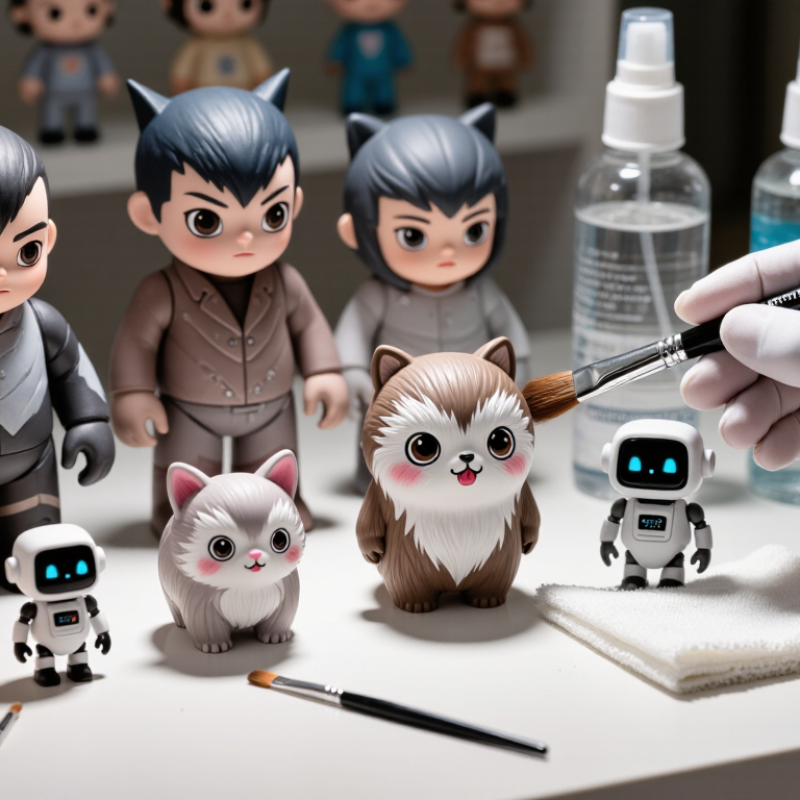
Cleaning a custom toy safely begins with identifying its surface. Plastic often feels firm and slightly glossy. Vinyl feels softer and may flex under gentle pressure. Painted areas can look matte, layered, or raised at the edges. These clues help, but they are not proof. Check the maker’s material information when available, and inspect hidden areas before cleaning. A cotton swab with lukewarm water can reveal loose color without stressing the finish.
ASTM F963-23 includes requirements for certain soluble elements in accessible surface coatings, including limits related to paint and similar materials. It is a safety standard, not a complete cleaning guide. A compliant coating can still fade from alcohol, bleach, abrasive powder, or prolonged soaking. Use a soft microfiber cloth, diluted mild soap, and minimal moisture. Wipe in one direction, then dry immediately. Avoid painted eyes, lettering, and thin edges. I once underestimated a glossy finish; even gentle rubbing changed its reflection. That mistake still matters.
Tips: Test an unseen spot first. Use less water than expected. Never scrape paint to identify it. If color transfers to the cloth, stop and let the toy dry. Do not assume ASTM F963-23 compliance from appearance alone; compliance depends on proper testing and documentation. When the material or coating is uncertain, pause cleaning and seek qualified conservation or product-safety advice. The safest method may feel overly cautious, but custom paint rarely offers a second chance.
Custom surfaces may contain paint, decals, varnish, and unsealed details. Choose a spot beneath the base or behind an accessory. Make three gentle wipes with distilled water. Then wait ten minutes. Check for color transfer, dullness, tackiness, or softened lines. This test reduces risk, but it does not guarantee complete safety.
Use a clean microfiber corner that is barely damp. Make three light, straight wipes. Do not scrub. Let the area dry fully before inspection. View it under angled light. I would photograph the spot first, although that can feel excessive.
Stop if paint appears on the cloth. Stop if the surface becomes dull or sticky. Also stop when lines soften, flakes loosen, or colors change. Do not continue testing a damaged finish. A small change can become a larger loss.
Use lukewarm distilled water and a tiny amount of mild, pH-neutral soap. Choose a soft microfiber cloth. A soft brush can remove loose dust first. Use a cotton swab around grooves and joints. Avoid rough sponges and strong cleaners. Gentle tools matter.
Work on one section measuring about 5–10 centimeters. Dampen the cloth lightly. Wipe with gentle, straight movements. Keep moisture on the surface for less than 30 seconds. Dry that section immediately. Do not clean the whole toy at once.
Pause instead of scrubbing harder. Repeated pressure can lift delicate paint or create a shiny patch. Check the cloth for trapped grit. Retest the area only if the finish remains unchanged. Sometimes the mark needs professional conservation. Cleaner is not always better.
Rinse each cleaned surface with clean water. Pay close attention to joints and textured paint. Pat the toy dry with a clean cloth. Then place it on a clean rack with airflow. Avoid direct heat. Heat may cause cracking or color changes.
Use bright side lighting to examine edges, eyes, joints, and fingerprints. Look for dull patches, tackiness, loose flakes, new chips, or color transfer. Inspect the rinse water for paint particles. Reinspect before children handle the toy. Visual inspection cannot confirm chemical safety. I sometimes miss tiny edges.
How to clean custom toys without damaging the paint? Start by identifying whether the toy is made from plastic, vinyl, or a combination of materials, and inspect the painted areas for loose edges, cracks, or fading. Review the coating expectations described in ASTM F963-23, then test a hidden spot with three light wipes before treating the entire surface. This small test can reveal whether the paint reacts to moisture or cleaning.
For routine cleaning, use distilled water with a pH-neutral cleaner between pH 6 and 8. Work in small sections of approximately 5–10 cm, applying gentle pressure and keeping the cleaner’s dwell time under 30 seconds. Rinse away residue with clean water, allow the toy to air-dry completely, and reinspect the finish under good lighting. As a final quality check, compare the result with the migration-related considerations outlined in EN 71-3:2021, while avoiding harsh chemicals, abrasive tools, and prolonged soaking.

 Kasten Toys