Small rooms can still hold a memorable custom toy collection. The real challenge is not owning fewer figures. It is creating order without removing personality. This guide, “China Top 10 Custom Toy Display Ideas for Small Spaces,” explores practical methods for collectors working with narrow shelves, rented apartments, and crowded desks.
How to display custom toy collections in small spaces? Begin by studying the room’s unused vertical areas, corners, and furniture gaps. Wall-mounted ledges can lift figures above work surfaces. Clear acrylic risers can create two or three visible levels inside one cabinet. A rotating platform may give a favorite piece attention without requiring extra width. Small labels, warm LED strips, and matching back panels can also make a compact display feel intentional.
Interior design principles still matter. British designer William Morris offered a useful standard: “Have nothing in your house that you do not know to be useful, or believe to be beautiful.” His advice suits toy collectors, although not perfectly. A rare figure may be beautiful but difficult to dust. A practical case may protect a collection while hiding its details. That tension deserves honest attention.
There is no universal layout. Some collectors may prefer dense, colorful arrangements. Others need breathing room between characters. Measure every object, including bases and accessories, before buying display furniture. Leave space for future additions. Otherwise, the collection may outgrow the room within months. The following ideas balance protection, visibility, and personal style, while accepting that a small space will always demand a few compromises.
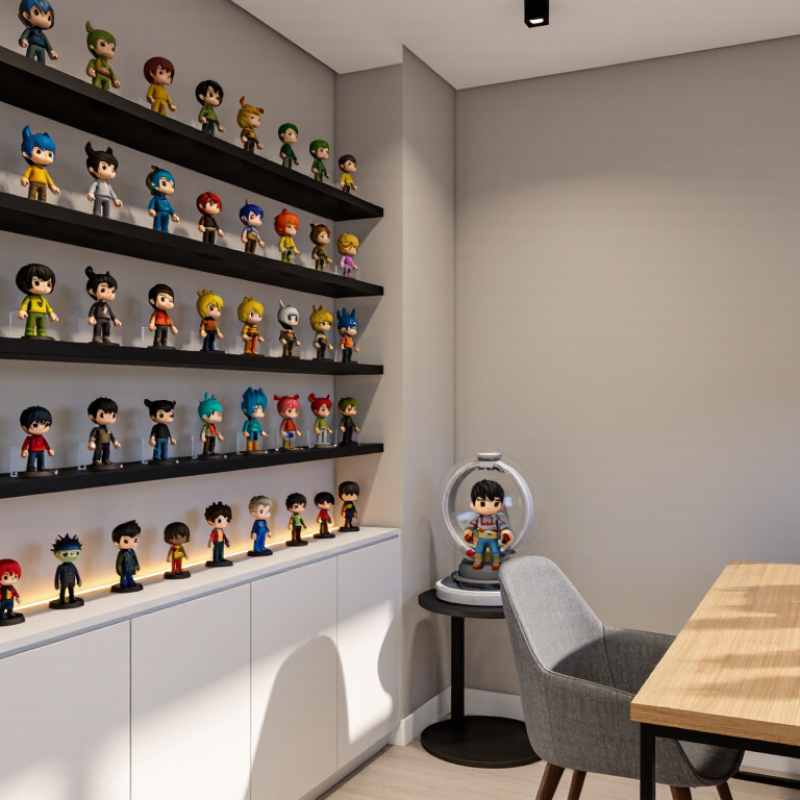
What Makes a Custom Toy Display Ideal for Small Spaces in China
China Top 10 Custom Toy Display Ideas for Small Spaces
What makes a custom toy display ideal for small spaces in China? It must use vertical space without making a room feel crowded. Wall-mounted cubes, slim glass cabinets, and rotating corner shelves can hold collections while preserving floor area. In compact apartments, a depth of 18 to 25 centimeters often works better than a deep cabinet. Adjustable shelves also accommodate figures, vehicles, and changing collections.
Safety and maintenance matter just as much as appearance. A stable unit should use strong wall anchors suitable for the installation surface. Rounded edges reduce daily bumps, especially in homes with children. Clear doors help protect toys from dust and humidity, which can be troublesome in coastal cities. Ventilation is useful for enclosed displays. Soft lighting improves visibility, but excessive heat may damage sensitive materials.
Practical experience shows that modular designs are easier to repair and expand. Local installers should measure uneven walls, power access, and doorway width before production. One mistake I still see is designing for the current collection only. Leave some empty space. It prevents visual clutter and allows future changes. A perfect display may look impressive, yet it can become inconvenient if every toy needs careful rearrangement. Simplicity usually serves small homes better.
Top 10 Space-Saving Custom Toy Display Ideas for Compact Rooms
Small rooms need displays that work vertically, not wider. Circana’s 2023 global toy market report valued toy sales at about $108.7 billion, showing how quickly collections can grow. The 2024 What Home Buyers Really Want report from the National Association of Home Builders also highlights storage as a highly valued home feature. Custom planning matters.
Try these ten space-saving ideas: 1. Install shallow floating shelves above a desk. 2. Use corner shelves beside a window. 3. Add pegboards with adjustable hooks. 4. Build a display inside a closet door. 5. Choose a narrow tower cabinet. 6. Mount clear wall cubes at child height. 7. Turn the space under stairs into toy shelving. 8. Use a window seat with hidden storage. 9. Add rotating shelves inside a corner unit. 10. Create a fold-down display panel behind a door.
Measure twice. My first compact-room layout failed because the lower shelves blocked a wardrobe handle. Leave at least 5 centimeters around doors, vents, and walkways. Keep heavy toys on the lowest level, especially in family rooms with active children. Use rounded edges and secure wall-mounted units to suitable structural points. A 2023 consumer safety review from the U.S. Consumer Product Safety Commission emphasizes anchoring furniture to reduce tip-over hazards. I would also group toys by size, not only by color. It looks less perfect, but children usually retrieve items faster.
Materials, Shapes, and Features for Small-Space Toy Displays
Small spaces benefit from toy displays that work vertically, not widely. Ten compact ideas can include wall ledges, corner cubes, peg rails, fold-down shelves, clear pockets, stackable bins, rotating towers, under-bed drawers, magnetic panels, and narrow rolling carts. Each option should match the room’s traffic pattern and the toy collection’s weight.
Choose materials for both appearance and daily use. Bamboo, sealed plywood, powder-coated metal, and durable acrylic offer different textures and maintenance needs. Rounded wooden shelves feel warm, while transparent pockets keep small figures visible. Cubes suit square toys, but curved trays fit dolls, balls, and soft animals better. Include adjustable dividers, labels, ventilation gaps, and soft-close hinges where possible. A display that looks beautiful but collects dust quickly needs reconsideration. My first layout used deep shelves, yet children hid toys behind the front row. Shallower shelves worked better.
Tips
Measure the wall, baseboards, and door swing before choosing a shape. Keep heavier toys below shoulder height, and secure tall units to a suitable wall structure. Leave a small hand space between containers. Test one shelf for a week before installing several. Children may prefer open baskets over perfect visual order. That is useful feedback. Avoid sharp corners and unstable stacking, especially in busy play areas. Check fasteners regularly, because small-space furniture receives frequent handling.
How to Customize Toy Displays for Different Collections and Rooms
In compact Chinese apartments, a toy display should match both the collection and the room’s daily movement. Ten useful custom ideas include modular wall cubes, clear risers, rotating shelves, shallow drawers, pegboards, corner cabinets, shadow boxes, themed backboards, rolling under-bed trays, and magnetic labels. Small figures need narrow shelves with adjustable heights. Large vehicles require deeper platforms and stronger supports. A child’s room benefits from rounded edges, low shelves, and washable surfaces. A study can use darker wood tones and enclosed doors to reduce visual clutter. Measure the wall, floor clearance, and lighting before ordering custom furniture. It prevents expensive surprises.
I once placed tall shelving beside a bedroom door, and the display looked attractive but blocked movement. That mistake changed my planning method. Now, I leave a clear walking path and test shelf reach with paper templates. For delicate collections, acrylic doors reduce dust, while open pegboards make frequent play easier. A living room may need hidden drawers for quick cleaning. A narrow hallway suits vertical cabinets with soft lighting. Avoid strong direct sunlight, especially for painted items and printed packaging. Labels should use simple categories, such as scale, theme, or owner. Some collections grow faster than expected. Leave spare holes, movable dividers, and at least one empty shelf. Perfect planning is rarely permanent.
China: Top 10 Custom Toy Display Ideas for Small Spaces
The chart compares the approximate display footprint of compact toy-display concepts. Lower values require less wall, floor, or furniture space and are easier to customize for different collections and rooms.
Planning reference: footprint estimates are calculated from typical compact display dimensions in centimeters. Wall-mounted ledges, rails, and shadow boxes are suitable for bedrooms, study areas, and narrow corridors, while corner shelves and cube units work better in living rooms or playrooms.
Safety, Organization, and Maintenance of Compact Toy Displays
China Top 10 Custom Toy Display Ideas for Small Spaces
Safety, Organization, and Maintenance of Compact Toy Displays
Small rooms need displays that work hard without becoming crowded.
In compact-room planning, wall rails, shallow cubes, corner shelves, and peg panels save valuable floor space. Clear front bins keep favorite toys visible. Labeled fabric pockets reduce searching. A rotating tray uses forgotten desk space. Fold-down shelves appear only when needed. Under-bed drawers and narrow window ledges add two more practical options. Keep heavy items low. Secure wall-mounted units to suitable structural points, then check fasteners regularly. Rounded edges and stable bases matter more than decoration. Keep walking paths open, especially near doors and beds.
Organization should match a child’s reach and daily habits.
Group puzzles, figures, vehicles, books, and craft tools separately. Use one small return basket for hurried cleanups. It is not perfect. Children may still mix everything. That is normal. Avoid overfilling containers, because hidden weight can strain shelves and encourage pulling. Transparent panels can reduce handling, but they need smooth, sealed edges and safe ventilation.
Maintenance keeps a custom display dependable.
Dust shelves weekly with a dry or slightly damp cloth. Inspect cracks, loose screws, and chipped coatings. Wash removable bins with mild soap, then dry them completely. Rotate displayed toys to reduce clutter and notice damage early. Keep small pieces away from younger children, following age guidance and local safety recommendations. Measure twice before installation. I once planned a corner shelf, then discovered the door swung into it. Recheck clearances before drilling.
FAQS
Use shallow floating shelves, wall cubes, pegboards, or narrow tower cabinets. Vertical storage leaves walkways open.
Corner shelves can use the narrow space beside a window. Keep the ledge clear of curtains and window controls.
Leave at least 5 centimeters around doors, vents, and walkways. Measure twice before drilling.
Place heavy toys on the lowest shelf. This improves stability when children pull items from above.
Mount clear wall cubes at child height. Store puzzles, vehicles, books, and craft tools in separate sections.
Yes. Consider under-stair shelves, under-bed drawers, or a window seat with hidden storage. Check access carefully.
Secure wall-mounted units to suitable structural points. Choose rounded edges, stable bases, and smooth sealed surfaces.
Dust shelves weekly with a dry or slightly damp cloth. Check screws, cracks, and chipped coatings regularly.
Check door swings before drilling. I once placed a corner shelf where a wardrobe handle could not move.
Use one small return basket for quick cleanups. Grouping by size may work better than grouping only by color.
Conclusion
Designing a custom toy display for a small space in China requires a balance of storage efficiency, visual appeal, safety, and flexibility. The ideal display uses vertical walls, corner units, stackable sections, rotating shelves, or slim cabinets to maximize every available area without making the room feel crowded. Lightweight wood, acrylic, metal, and durable composite materials can be shaped into modular, transparent, or adjustable systems that suit different toy sizes and collection styles. Rounded edges, stable bases, secure mounting, and dust-resistant surfaces also improve safety and maintenance.
How to display custom toy collections in small spaces? Start by sorting toys by size, theme, frequency of use, or color, then choose a display structure that matches the room’s layout. Adjustable shelves can accommodate changing collections, while labeled compartments and hidden drawers keep smaller pieces organized. For bedrooms, study areas, or shared rooms, compact displays with easy-clean surfaces and discreet storage help maintain a neat appearance while allowing each collection to remain visible and accessible.

 Kasten Toys